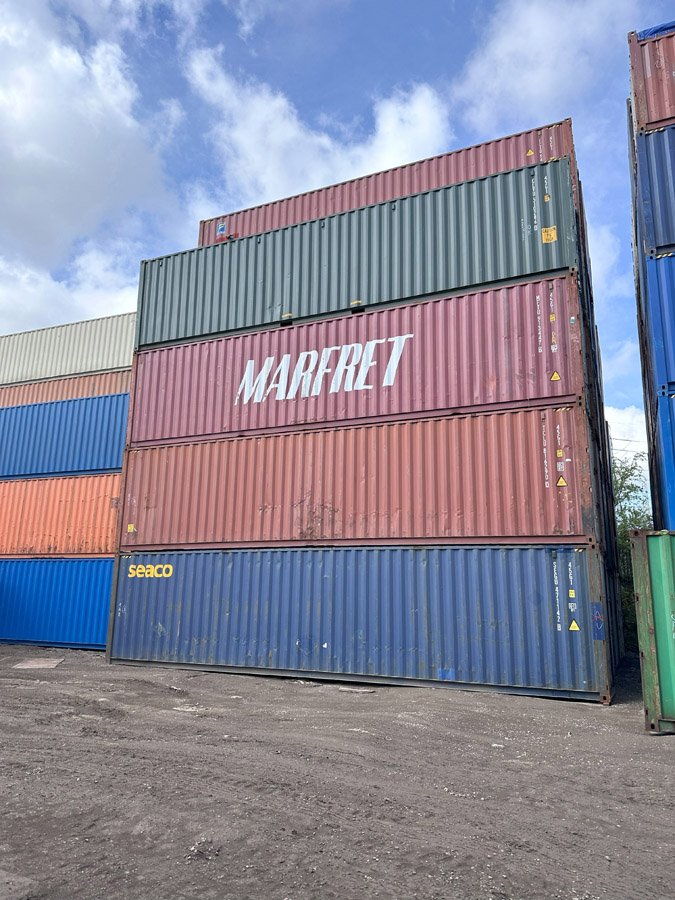
40ft Shipping
Purchase New & used 40ft shipping containers in Leeds. Perfect for storage, shipping, & conversions.


40ft container

40ft Shipping Containers for Sale in Leeds

A 40ft shipping container is well suited to businesses and sites that need substantially more storage space without splitting goods between several smaller units. The long, clear interior works well for palletised stock, building materials, machinery, furniture, equipment and other bulky loads.

Shipping Containers of Leeds supplies new and used 40ft containers for purchase. If you only need the extra space for a defined project or temporary increase in storage, compare purchase with 40ft container hire before deciding.

A standard 40ft container is approximately 40ft long, 8ft wide and 8ft 6in high externally. That footprint makes delivery and positioning more demanding than with a 20ft unit, so access and the final placement area should be checked before arranging transport.

inside 40ft Container

New, One-Trip or Used 40ft Containers

The condition you need depends on the job. A one-trip container has normally completed a single loaded journey from the country of manufacture. It can still have handling marks, small dents or paint scuffs, but generally has less previous shipping wear than an older used unit.

Used containers have spent longer in freight service and may show dents, surface corrosion, repairs, shipping markings and differences in paint finish. For static storage, cosmetic wear may matter less than the condition of the roof, doors, seals, floor and main structure.

Wind and watertight is primarily a storage description. It means the container is intended to keep normal weather out when correctly closed. It should not be confused with cargo-worthy condition or current certification for international shipping.

If the container will travel as cargo rather than remain on site, tell the supplier before ordering. Cargo condition, inspection history and the CSC plate, which is the Container Safety Convention approval plate, need to be checked for the intended movement. Carrier acceptance can also vary.

40ft shipping container

40ft Standard Container Specifications

The dimensions below are typical of a standard-height 40ft container. Individual specifications can vary by manufacturer, age and design, so use the figures for planning rather than assuming every available unit will be identical. Where clearance, payload or machinery fit is critical, confirm the actual container specification before purchase.

Feature Imperial measurement Metric measurement
External dimensions (L x W x H) 40' x 8' x 8'6" 12.192 x 2.438 x 2.591 m
Internal length 39' 5 11/16" 12.032 m
Internal width 7' 8 1/2" 2.350 m
Internal height 7' 10 7/32" 2.393 m
Door opening width 7' 8 1/8" 2.340 m
Door opening height 7' 5 1/2" 2.274 m
Internal volume 2,366 ft3 67 m3
Maximum payload 63,640 lb 28,870 kg
Maximum gross weight 71,650 lb 32,500 kg
Tare weight 8,010 lb 3,630 kg

For a closer check before planning a site or load, see the 40ft standard container dimensions.

Standard or High Cube

Standard 40ft containers are 8ft 6in high externally. High cube containers increase the external height to 9ft 6in, giving extra headroom for taller equipment and bulky goods without increasing the length or basic footprint.

The extra height is useful where volume is the limiting factor, but it is not automatically necessary for every storage job. A standard-height unit can be the better choice when everything already fits comfortably through the doors and overhead clearance on the site is restricted.

Door dimensions matter as much as internal capacity. Large machinery can fit within the body of a container but still be impossible to manoeuvre through standard end doors. Measure the load at its widest and highest points before ordering.

40ft high cube shipping container

When a Standard 40ft Container Is Not the Right Type

A standard dry container works well where goods can be loaded through the end doors. Specialist cargo sometimes calls for a different design.

  • Open top: A 40ft open top container can suit tall or awkward cargo that needs to be lowered in from above.
  • Flat rack: A 40ft flat rack provides open sides for loads that exceed the width or loading restrictions of an enclosed container.
  • Refrigerated: A 40ft refrigerated container is designed for goods that require controlled temperatures rather than ordinary dry storage.
  • Smaller footprint: A 20ft shipping container may be easier to deliver and use where the site does not justify the full 40ft length.

Planning the Inside for Storage

The long interior is one of the main advantages of a 40ft container, but it can also make poorly organised storage frustrating. Goods placed near the doors are easy to reach, while anything packed tightly at the far end may require other stock to be moved first.

For frequent access, leave a sensible aisle and consider shelving or racking rather than using every possible cubic metre. Heavy items should be loaded with regard to the floor and the way their weight is distributed. Concentrating a substantial load onto a few small contact points can create different demands from evenly distributed palletised goods.

Security can be improved with a suitable padlock and lockbox arrangement. If the contents are sensitive to moisture, remember that a wind and watertight steel box can still suffer condensation. Ventilation, sensible loading, keeping wet goods out and, where appropriate, lining or insulation can help manage the risk.

Preparing for HIAB Delivery

HIAB is commonly used to describe a lorry-mounted hydraulic crane capable of lifting a container from the delivery vehicle and placing it onto the prepared position. A 40ft container needs considerably more operating space than its final 40ft by 8ft footprint suggests.

Before delivery, check the full vehicle route as well as the final location. Gates, bends, parked vehicles, walls, and other restrictions can prevent a large lorry from reaching the unloading point. Soft or unstable ground may also prevent safe access.

Look upwards. Trees, cables, lighting, building overhangs and other obstructions can limit crane operation. Crane reach is also finite, so a container cannot necessarily be lifted over buildings or deep into a site simply because there is enough room for it once positioned.

The support area should be firm and reasonably level. A twisted container can develop stiff doors even where there is nothing wrong with the locking gear. Good drainage and suitable supports also reduce the likelihood of settlement. The container foundations guide explains the main considerations in more detail.

Confirm the required door orientation before delivery. Reversing the container later can involve another lift, so knowing which end needs to face the access route is a small detail that can prevent unnecessary work.

Buying or Hiring a 40ft Container

Buying generally suits longer-term use, particularly where you expect to keep the container, move it between your own sites or make permitted modifications. You also take responsibility for future maintenance, relocation and disposal or resale.

Hire is often more appropriate for building work, seasonal stock or temporary overflow where the requirement has a known end point. Check the hire period, collection arrangements, responsibility for damage and any restrictions on modifications before committing.

Whichever route you choose, keep future collection access in mind. A container can be easy to place on an empty site and considerably harder to remove after fencing, buildings, stored materials or landscaping have been added around it.

Planning and Longer-Term Siting

Planning requirements can depend on the proposed use, how long the container will remain, the status of the site, neighbouring property, conservation considerations, listed status, associated building works and whether the proposal involves a change of use.

Do not assume planning permission is always required or automatically unnecessary because the unit can be moved. For general background, see the shipping container planning permission guide. For a specific site in Leeds, check the current position with Leeds City Council before relying on any general guidance.

Choosing Your 40ft Container

Start with the load rather than the container. Measure the largest items, work out how frequently you need access and decide whether the unit is for static storage or shipping. Then check the site dimensions, vehicle route, crane restrictions and ground preparation.

If a standard 40ft dry container fits those requirements, condition becomes the next decision. One-trip may suit a prominent site or longer-term project where appearance matters, while a sound used unit can be practical for working storage where cosmetic wear is less important.

You can compare the wider container sales range or contact Shipping Containers of Leeds with the proposed use, site details and access information so the container and delivery requirements can be checked together.

container depot

Container Pricing

At Shipping Containers of Leeds, our mission is simple: to deliver top-tier shipping containers at prices that are both fair and competitive.

Guided by our commitment to transparency, our expert team ensures that every aspect of our service, from the condition of our containers to the delivery process, is handled with the utmost professionalism and attention to detail.

Get in touch with us for a quote tailored to your project.

Newsletter

Please sign up for our newsletter to receive our latest stock levels, special offers and company news.

SIGN UP

Office Hours

Monday : 9:00-17:30
Tuesday : 9:00-17:30
Wednesday : 9:00-17:30
Thursday : 9:00-17:30
Friday : 9:00-17:30
Saturday : Closed
Sunday : Closed