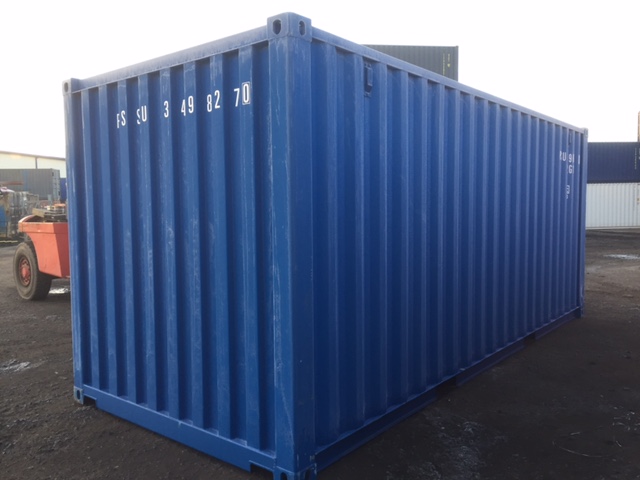
20ft Shipping Containers in Leeds
A 20ft shipping container is a practical middle ground between compact storage and the much larger footprint of a 40ft unit. It gives you around 33 m3 of internal space while keeping to an external footprint of approximately 20ft by 8ft, which makes it suitable for many yards, commercial sites and other locations where space needs to be used carefully.
Shipping Containers of Leeds supplies 20ft shipping containers for sale in new and used condition. Typical uses include storing tools, machinery, retail stock, archived materials, household contents and construction equipment.
The right unit depends on what you intend to store, how often you need access and how long the container will remain on site. Condition, security, ventilation and delivery access should all be considered before choosing a particular container.

20ft Shipping Container Dimensions
Standard dimensions make a 20ft container easier to plan around, but the measurements of individual units can vary slightly by manufacturer and specification. If a dimension is critical, confirm it for the container being supplied.
Typical specifications for a 20ft standard shipping container
| Description |
Imperial measurement |
Metric measurement |
| External dimensions (L x W x H) |
20' x 8' x 8'6" |
6.096 x 2.438 x 2.591 m |
| Internal length |
19' 4 1/8" |
5.896 m |
| Internal width |
7' 8 1/2" |
2.350 m |
| Internal height |
7' 10 7/32" |
2.393 m |
| Door opening width |
7' 8 1/16" |
2.350 m |
| Door opening height |
7' 5 1/2" |
2.274 m |
| Internal volume |
1,165 ft3 |
33 m3 |
| Maximum gross weight |
67,197 lb |
30,480 kg |
| Maximum payload |
62,391 lb |
28,300 kg |
The door opening can be more important than the overall internal volume if you intend to store large machinery, pallets or bulky furniture. Measure the largest item that needs to pass through the doors rather than assuming anything that fits inside will also fit through the entrance. The 20ft standard container dimensions page provides further detail for checking the available space.
What Fits Inside a 20ft Container?
A standard 20ft container provides a useful amount of enclosed floor space for domestic and commercial storage. Capacity in practice depends on the shape of the items, the way they are packed and how much access you need after loading.
If you fill the container tightly from front to back, you can make efficient use of the volume but may struggle to reach anything stored towards the far end. For stock, tools or equipment that needs regular access, leaving an aisle or using shelving can be more useful than maximising every cubic metre.
Door size also affects what can be stored. Long or bulky items may physically fit within the internal dimensions but still be difficult to manoeuvre through the end doors. Where this is a recurring problem, an open-top, side-access or other specialist container may be more appropriate than modifying the way you load a standard unit.
New, One-Trip and Used 20ft Containers
One-trip containers have normally completed a single loaded journey from the country of manufacture. They generally have less previous shipping wear than older used units, although minor handling marks can still be present.
Used containers may show dents, surface corrosion, repairs, previous shipping markings and variations in paintwork. For straightforward storage, appearance may be less important than door operation, structural condition and whether the unit is wind and watertight.
Wind and watertight describes a container that keeps normal weather out when properly closed. It should not be treated as a guarantee about cosmetic condition, condensation or suitability for a particular sensitive product.
If the container will be used for international freight, cargo suitability and current certification need to be checked separately. A unit suitable for static storage is not automatically suitable for shipping.

Buying or Hiring a 20ft Container
Buying is normally more relevant where the container will remain useful for the longer term, you want control over its future location or you plan to make permitted modifications. Ownership also means deciding what to do with the container if your requirements change later.
For temporary storage, 20ft container hire can avoid the need to own and dispose of the unit afterwards. Hire may suit building projects, seasonal stock, temporary business storage or other requirements with a clearer end date.
Before hiring, check the agreed period, permitted use, responsibility for damage, restrictions on alterations and arrangements for collection. Keep access available throughout the hire because a container that can be delivered today may become difficult to collect if fencing, stored materials or building work later blocks the route.
Security and Everyday Access
Standard cargo doors use locking bars to secure the container. A lockbox can provide extra protection by shielding the padlock from direct access, although the overall security arrangements should still reflect the value of the contents and the site where the container is located.
Think about how often the doors will be opened. Traditional shipping container doors are robust, but their operation can be affected if the container is not level. Supporting the unit properly helps keep the frame square and makes opening and closing easier.
If goods will be accessed several times a day, internal organisation becomes particularly useful. Shelving and racking can prevent smaller items becoming buried behind larger stock and make better use of the container height.

Condensation, Ventilation and Insulation
A wind and watertight container prevents normal rain from entering, but it does not prevent condensation. Moisture in the internal air can condense on colder steel surfaces when temperatures change, especially where damp items are introduced or airflow is poor.
Ventilation can help manage moisture by allowing air movement. For contents that are more sensitive to temperature changes or condensation, lining and insulation may also be worth considering. These measures work differently, so the specification should be based on what is being stored rather than added by default.
Heating, lighting and sockets can also be considered where a container will be used as more than basic storage. Electrical work should be designed and installed for the intended use rather than relying on temporary wiring.
Preparing the Ground for a 20ft Container
A shipping container should sit on firm, level support. If one corner settles or the base is twisted, the doors can become difficult to operate and unnecessary stress can be placed on the frame.
The ground does not necessarily need to be a full concrete slab, but the chosen support arrangement needs to suit the site and intended loading. Drainage should also be considered so water does not collect unnecessarily around the base. The container foundations guide covers the main preparation options.
Leave enough clear space in front of the doors to open them fully and move stored items in and out. Positioning a container tightly against a fence or wall can reduce usable access even where the footprint itself fits comfortably.

HIAB Delivery and Site Access in Leeds
HIAB refers to a lorry-mounted hydraulic crane used to lift a container from the delivery vehicle and position it on the prepared site. The final container space is only one part of the delivery assessment because the vehicle also needs suitable access and room to manoeuvre.
Before delivery, measure gates and entrances and consider tight bends, walls, parked vehicles, slopes and soft ground. Look above the route as well. Trees, overhead cables, canopies and other structures can restrict crane operation.
Tell the supplier which way the cargo doors need to face before placement. Crane reach is limited, so a container cannot necessarily be positioned anywhere on a site simply because the finished location is large enough.
Planning and Longer-Term Placement
Planning requirements depend on the circumstances. Intended use, duration, site status, neighbouring property, listed status, conservation areas, associated works and any change of use can all affect whether further checks are needed.
Do not assume that a shipping container automatically needs planning permission or that temporary placement is always exempt. Where the position is unclear, check the current requirements with Leeds City Council before committing to longer-term placement or related works. The shipping container planning permission guide provides further general information.
Choosing the Right 20ft Shipping Container
Start with what you need to store. Measure the largest items, consider how regularly they need to be accessed and decide whether appearance or shipping certification matters. Then check the available footprint, delivery route, door clearance and ground conditions.
If 20ft does not provide enough space, compare it with 40ft shipping containers. If space is especially tight, a 10ft container may provide enough storage without taking up unnecessary room.
You can compare the wider container sales range or contact Shipping Containers of Leeds once you know the size, intended use and delivery details.